Press Review
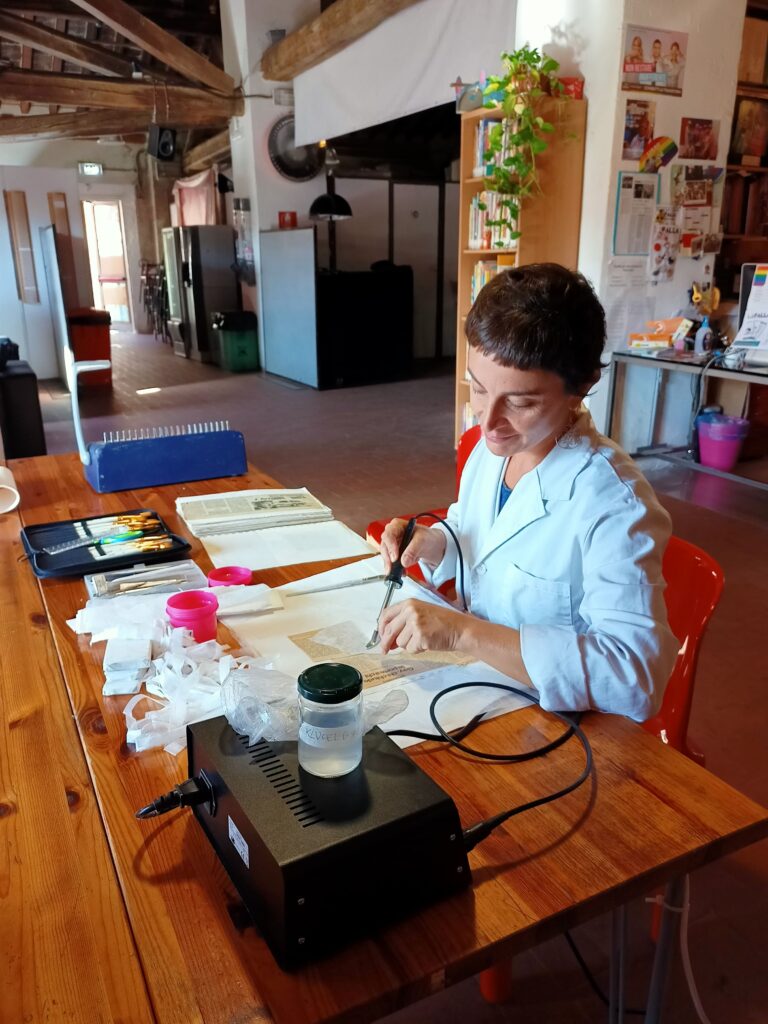
The project, funded in 2021 and 2022 by Ministry of Culture, General Direction libraries and copyright through the Archival and bibliographical Supervision of Emilia-Romagna thanks to the funds directed to the preservation of non-State librarian heritages, has the goal of stabilizing, digitalizing, and reconditioning (with contextual metadata) the digital documents belonging to the thematic press review collection preserved in Cassero.
In two years, a total of 17 file folders and 7690 articles from the period between 1960 and 1988, taken from Italian and international newspapers and periodicals, were digitalized.
The Center’s press review collection was developed thanks to the work of volunteers who, during the 40 years of the Center’s activity, gathered and selected articles relevant to the community covering a vast temporal period: from 1960 to 2016, first in printed format and later in digital format.
It includes paper clippings from reports, politics and culture sections of newspapers and periodicals that show the social and cultural changes concerning LGBTI+ rights in contemporary Italian history. The press review is composed of 140 file folders containing articles from newspapers and periodicals in chronological order, from 1960 to today. This precious documentation, telling about the social condition and history of LGBTI+ people in a period of over sixty years, has also been built through collaboration and exchange with other Italian associations. Nowadays, the collection is an essential tool for those researching the condition of LGBTI+ people and the history of the movement in Italy for its uniqueness and completeness.
Overseen by the Archival and bibliographical Superintendence of Emilia-Romagna, the project has not only bettered the preserving conditions of the materials thanks to their restoration and movement into suitable containers, but has also improved their usage through digitalization: it is now possible to get a clear idea of the owned documents, relevant to the most important events in the history of the movement, without having to consult the original documents.
In order to guarantee a better research inside the texts themselves, the documents were scanned with OCR (Optical Character Recognition) technology, filed following a naming convention, and then inserted into Pimcore software.